News
When Nicotine Isn’t the Whole Problem: How Misguided Bans and Enforcement Gaps Fuel the Illicit Vape Market
9 July, 2026
Key Message
Focusing on nicotine alone misses the bigger public health issue: whether regulation can distinguish between accountable, adult-focused smoke-free alternatives and illicit products that operate outside testing, age controls and enforcement.
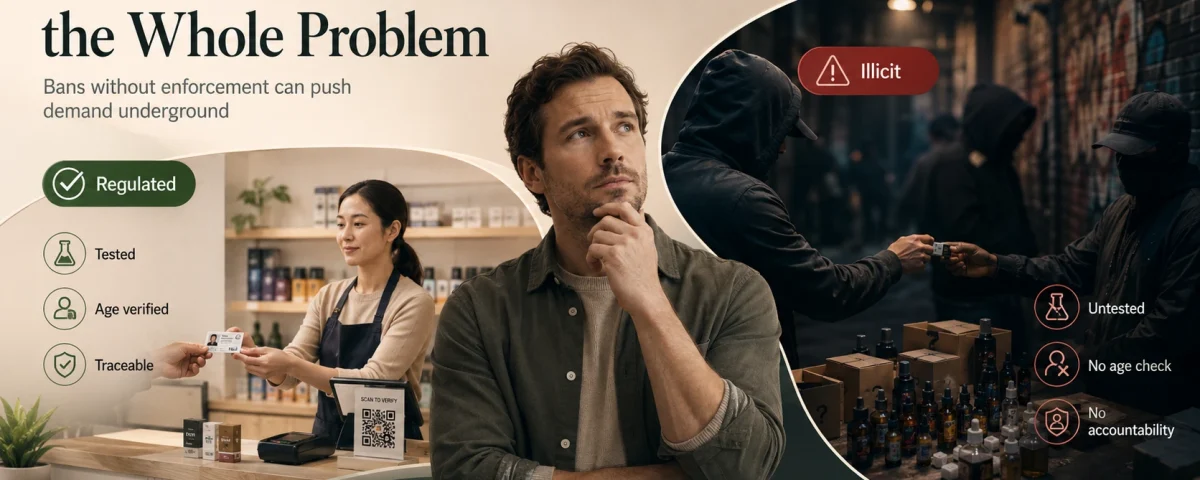
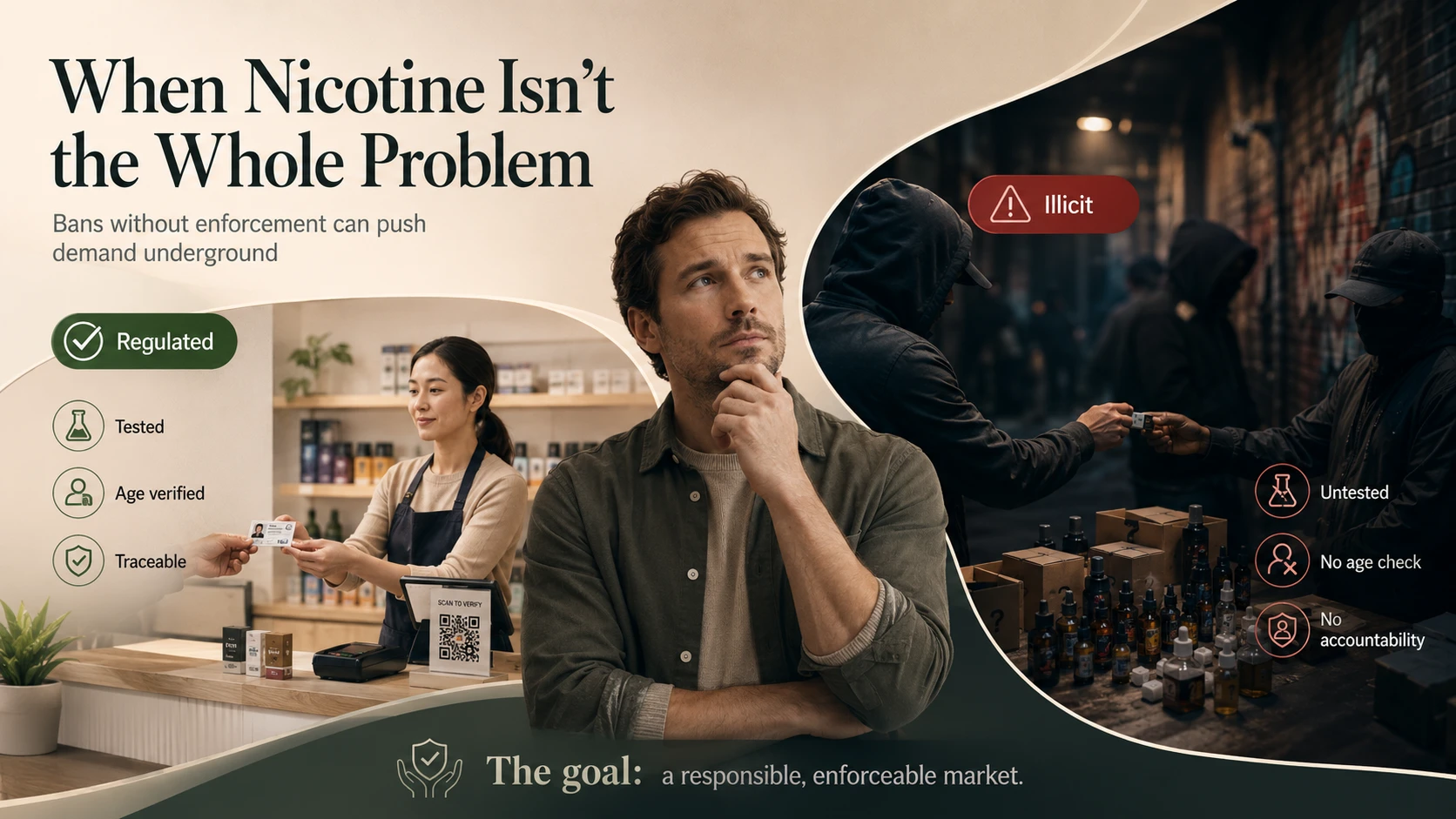
When bans are not matched with practical enforcement, they risk pushing demand underground, weakening harm-reduction pathways for adult smokers, and making the market harder to control.
Nicotine Is Not the Whole Problem
Nicotine is addictive and not risk-free. But treating nicotine as the entire problem can lead to the wrong policy response.
The bigger public health question is not only whether a product contains nicotine. In reality, it is whether the products available comply with the industry’s safety standards and when the situation goes south, which party would be held accountable.
Smoke-free nicotine products have a clear purpose: to help adult smokers move away from combustible cigarettes. In addition to that, they should not be marketed to young people, non-smokers, or nicotine-naïve consumers.
That distinction is central to any credible harm-reduction argument.
Where Compliant and Illicit Operators Differ
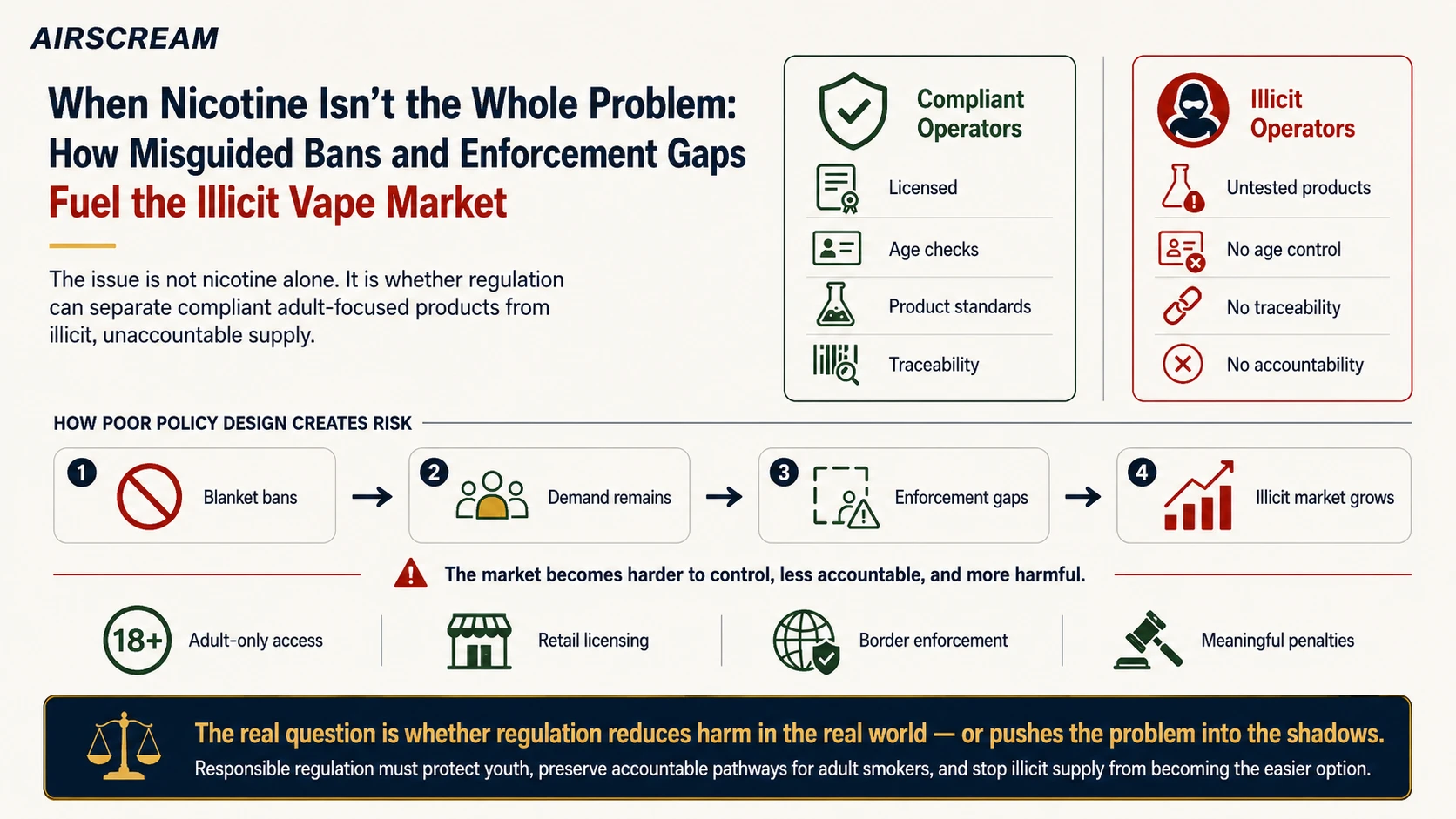
Compliant businesses are usually licensed, placed under strict scrutiny and are required to follow product, labelling, marketing and age-verification rules.
While an illicit seller mostly operates outside that system. It does not need to test products, verify age, follow packaging rules, provide traceability, or answer to regulators. Worst, they do not take any accountability for consumers at a mass.
That difference matters.
If regulation policies treat all nicotine products across the board under the same lens. This is ignoring the difference between a regulated product designed for adult smokers and an illegal product sold through unmonitored channels. Which causes actual major risk to public health.
When Bans Miss Market Reality
Blanket bans can look decisive on paper. To the public eye this is a win, because the sentiment is; if does not benefit the majority – why not stop it altogether.
But in practice, demand does not disappear overnight because legal access is restricted.
Adult smokers who had switched to regulated alternatives may be left with fewer options. Some may return to cigarettes. Others may look for products through informal or illegal channels.
At the same time, if regulation becomes too rigid or commercially unworkable, compliant brands will leave the market. And when responsible operators exit but consumer demand remains, the gap does not stay empty.
This is where the illicit products and brands come in…
The Enforcement Gap
Then enforcement has now become more important than the announcement of a ban itself.
Without it, regulation risks becoming symbolic: strong in language, weak in outcome.
Illicit products are fast moving through underground channels, and it sprouts faster than the regulatory bodies can handle. With this consumer are at a bigger risk; devices from such sources are usually dangerous with untested chemicals, foreign substances added in.
In that environment, the market does not become safer. It becomes uncontrollable, less accountable, and eventually becomes more harmful.
What Responsible Regulation & Actual Enforcement Looks Like
The balance is that nicotine products should be regulated in a manner that it does not restrict access to adult smokers.
Actual harm reduction requires strict rules: adult-only access, strong age verification, product standards, retail licensing, marketing controls, border enforcement, traceability and meaningful penalties for non-compliance.
But those rules need to be enforced.
A legal retailer should be licensed, inspected, and penalized for selling to minors. Compliant brands can be restricted, audited, or removed from the market if they break the rules.
Illicit sellers and brands’ operations should be stopped when they do not conform to the industry’s safety standards.
That is why the goal should not be only to restrict the legal category. It should be to prevent illicit supply from becoming the easier, cheaper and more accessible option.
Conclusion: Regulation Must Reduce Harm in the Real World
Nicotine must be regulated. Youth should be protected. Irresponsible operators should be held accountable.
But regulations and enforcement must also work in reality. Adult smokers need regulated pathways away from combustible cigarettes, and compliant products should not be pushed out, only for illicit supply to fill the gap instead.